
Applications that Benefit Most from Tension Links
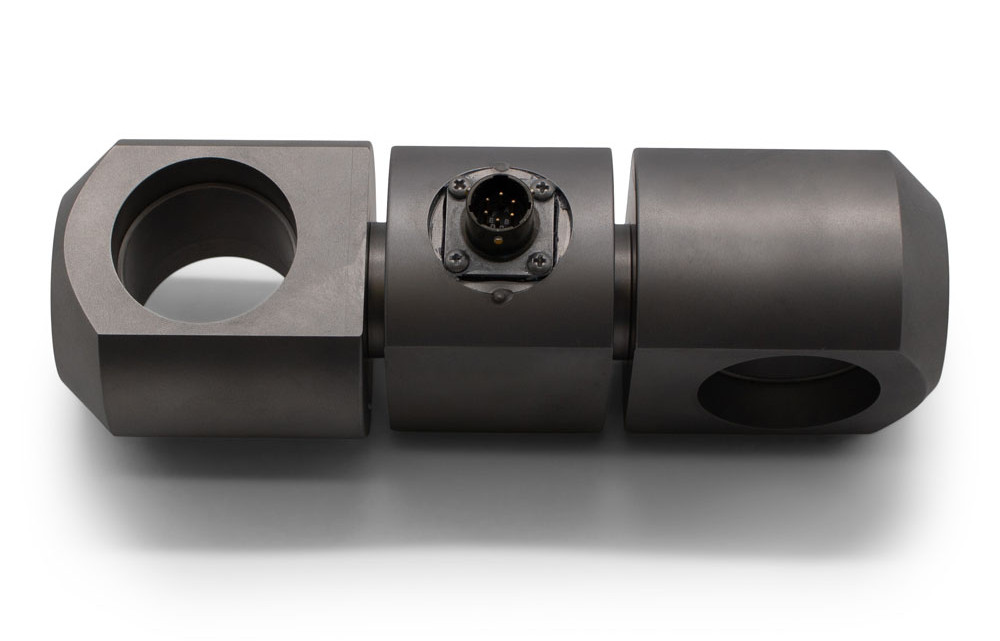
A tension link is one of the simplest tools in industrial force measurement, and also one of the most trusted. These load cells are designed to measure pulling force directly in the load path. They are commonly installed between shackles, hooks, wire rope assemblies, fixtures, and other rigging components so engineers and plant maintenance teams can see the force being applied while a system is lifting, holding, pulling, or testing.
That makes them especially valuable when the load itself is difficult to weigh through a platform scale, tank scale, or compression-based setup. In many applications, the force is already moving through a straight-line tension path. A tension link gives you a way to measure that force without rebuilding the entire system around a different sensor.
In this post, we will look at what tension links are, why engineers choose them, and which applications benefit most from their design. We will focus especially on crane load monitoring, aerospace force testing, and cable tension monitoring, while also covering other industries where accurate tensile force data can improve safety, quality, and equipment reliability.
What is a Tension Link?
A tension link is a type of load cell used to measure tensile force. In simple terms, it measures pulling force. The sensor is placed inline with the load path so force passes through the body of the link as the system is loaded.
Most industrial tension links use strain gauge technology. When force is applied, the metal sensing body stretches by a very small, controlled amount. Strain gauges bonded to the sensing element detect that deformation. The change in strain gauge resistance is then converted into an electrical signal that can be displayed, recorded, transmitted to a data acquisition system, or used by a control system.
This is why inline force measurement matters. Instead of estimating the load from motor current, hydraulic pressure, or indirect mechanical assumptions, the tension link measures the force where it is actually acting. For lifting, rigging, testing, and cable systems, that direct measurement can provide better visibility into the real condition of the system.
At MSNST, we manufacture tension links for demanding load monitoring and calibration applications, with stainless steel construction, optional hermetic sealing, integral cable or connector configurations, custom capacities, and several output options available depending on the application. In addition, MSNST offers off the shelf S cells often used in lower capacity lighter duty scenarios100 lbs-20K but also highly reliable and trusted in tension applications.
Why Engineers Choose Tension Links
Tension links earn their place in the field for a handful of clear reasons. Each one comes down to a tension link load cell that fits into existing equipment and holds up under real conditions, instead of forcing a redesign around it.
Accurate Inline Force Measurement
Because the sensor sits directly in the load path, a tension link delivers inline force measurement you can trust, a true reading of suspended weight instead of an estimate, with minimal change to existing rigging.
High Capacity and High Accuracy
As a tension load cell, a tension link spans laboratory loads through heavy industrial lifting while holding tight tolerances. MSNST's standard units, for example, are rated to 0.10% linearity and 0.05% repeatability of full scale.
Built for Harsh Environments
A tension link often works outdoors, offshore, or on an active manufacturing floor. Stainless steel construction and optional hermetic sealing keep it accurate through moisture, washdown, and temperature extremes.
Easy Integration
Because it is built to sit inline, a tension link drops into hooks, shackles, wire rope assemblies, and test fixtures with minimal added hardware, keeping installation simple across a wide range of force measurement applications, from field rigging to lab test fixtures.
Custom Engineering Options
Not every job fits a catalog part. MSNST also designs custom tension links for capacities, materials, environmental protection, and output options a standard unit cannot cover.
Applications That Benefit Most from Tension Links
Tension links are used across many industries, but three applications tend to show their value most clearly. Crane load monitoring, aerospace testing, and cable tension monitoring all involve tensile forces where accuracy, repeatability, and real-time visibility can make a meaningful difference.
Crane Load Monitoring
Crane load monitoring is one of the most common and important uses for tension links.
Cranes lift suspended loads through hooks, shackles, wire rope, slings, and related rigging components. Since the force is already moving through a tensile load path, a tension link can be installed inline to help monitor the lifted load. It gives operators real time visibility into the actual weight suspended, not an estimated figure, so they can catch an overload condition before it becomes a problem instead of after. With overhead weighing knowing the weight is critical for safety.
This setup shows up on mobile cranes, overhead cranes, and lifting equipment at construction sites, ports, and shipyards. Beyond preventing overloads, it protects the crane structure and rigging hardware from unnecessary wear, reduces downtime from equipment damage, and gives operators the awareness to make good decisions under pressure.
Aerospace Testing
Aerospace programs operate with very little margin for measurement error, and tension links have earned a place in many of the test setups that validate components before they fly. Aerospace force testing applications include structural testing, wing and landing gear evaluation, engine and qualification testing, ground support equipment, and defense programs, all of which depend on data that is both accurate and repeatable.
MSNST's own project history reflects that standard. The company has supported NASA's SLS and Artemis mobile launcher program and the Orion program's parachute cord tension monitoring, work built on the same traceable tension link load cell data these applications require. NIST-traceable calibration gives engineers confidence that a reading taken today will hold up against one taken months from now, supporting design validation and certification testing alike.
Cable Tension Monitoring
Cable tension monitoring is another strong use case for tension links. Wherever a cable, wire rope, or suspension element carries a working load, cable tension monitoring helps confirm that load stays where it should be.
Tension links are commonly installed on wire ropes, guy wires, suspension bridge cables, winches, elevators, and mining equipment, delivering continuous, accurate tension data instead of a periodic spot check. That continuous data supports predictive maintenance, flags an unexpected shift in load before it becomes a failure, and helps balance loads across multiple cables working together, extending service life and reducing the risk of an uneven, potentially dangerous load distribution.
Other Industries That Use Tension Links
The three applications above are some of the most common, but tension links are also used across many other industrial and testing environments. Tension links show up anywhere a facility needs accurate, reliable industrial load monitoring within a tensile load path.
Offshore and marine: Mooring line monitoring, offshore crane operations, anchor handling, and load tracking on floating platforms, environments where corrosion resistance and sealed construction matter as much as accuracy.
Renewable energy: Wind turbine installation, blade testing, maintenance lifting, and cable tension verification on turbine assemblies.
Civil infrastructure: Bridge cable monitoring, structural load testing, and temporary support systems during construction or repair work.
Oil and gas: Drilling equipment, pipe handling systems, offshore lifting operations, and subsea work.
Mining and material handling: Hoists, conveyors, rope tension monitoring, and heavy equipment maintenance.
Research and product development: University laboratories, materials testing programs, and prototype validation work, where repeatable, traceable data supports everything that follows.
Common Applications by Industry
Industry | Typical Application | Primary Benefit |
Construction | Crane load monitoring | Prevent overloads and improve lifting safety |
Aerospace | Structural and component testing | High-accuracy force measurement |
Marine and Offshore | Mooring line and lifting operations | Reliable monitoring in harsh environments |
Civil Engineering | Bridge cable monitoring | Long-term structural health |
Renewable Energy | Wind turbine installation and maintenance | Safe heavy lifting and load verification |
Oil and Gas | Rigging and subsea lifting | Load verification in demanding environments |
Mining | Hoists and conveyor systems | Equipment protection and reliability |
Manufacturing | Production equipment and testing | Process control and quality assurance |
Research Laboratories | Experimental and materials testing | Precise, repeatable measurements |
Choosing the right manufacturer makes all the difference.
Our team can help you evaluate your application and find a tension link solution built for performance, not just price.
How to Choose the Right Tension Link
Selecting the right tension link load cell starts with a clear picture of the application. A handful of factors determine whether a standard unit will do the job or whether a custom design is the better fit.
Capacity: Size the tension link for the actual working load, with enough margin to handle occasional peaks without operating near its rated limit.
Accuracy requirements: A laboratory test setup may need tighter tolerances than a general lifting application, so confirm linearity and repeatability specifications before choosing a model.
Environmental conditions: Outdoor installations, washdown environments, and corrosive or marine settings call for sealed, corrosion-resistant construction.
Temperature range: Extreme heat or cold may call for a version rated beyond standard limits.
Output signal: Confirm the tension link's output is compatible with your indicator, transmitter, PLC, or data acquisition system.
Mounting configuration: The physical fit needs to match your existing rigging or fixture, since the wrong fit creates integration headaches that are easy to avoid with the right specification up front.
Calibration requirements: Confirm these before purchase, not after. MSNST performs NIST-traceable calibration services in-house, so a tension link can arrive with documented, traceable accuracy from day one.
For applications that fall outside a standard part number, our engineering team can design a tension link around your capacity, environment, and integration needs. Browse the full range on the load pins and tension links here, or explore load pins if your application calls for that configuration instead.
When a Custom Tension Link is the Best Solution
Standard tension links handle the majority of applications, but certain situations call for a design built specifically around the job. Non-standard dimensions, unusually high capacity requirements, and extreme operating temperatures all push past what a catalog part can reliably support.
Corrosive environments, underwater or submersible applications, and aerospace and defense projects also tend to require custom tension links engineered with specific materials, sealing, and certification requirements in mind. Specialized testing equipment, where the sensor needs to integrate into a purpose-built fixture in place of a generic rigging setup, is another common driver for a custom design.
For maintenance and procurement teams, custom engineering can also reduce replacement difficulty. When an older or discontinued unit needs to be replaced, a custom-built tension link can be designed to match the original mechanical and electrical requirements while meeting current performance expectations.
Conclusion
Tension links are valuable because they measure tensile force directly where the load is acting. That makes them a strong choice for crane load monitoring, aerospace testing, and cable tension monitoring, where accurate force data can support safety, validation, maintenance, and better equipment decisions.
They are also widely used in marine, infrastructure, renewable energy, mining, manufacturing, oil and gas, research, and product development applications. The best results come from selecting a tension link that matches the capacity, accuracy needs, mounting geometry, output signal, calibration requirements, and operating environment.
If you need help selecting a standard tension link or designing a custom solution for a demanding application, contact MSNST. Our team can review your load path, capacity range, environment, instrumentation, and installation requirements so you can specify a tension link built for reliable force measurement in the field, lab, or production environment.

Have questions about your application?
Our team is here to to help you find the right tension link for your needs.


Comments